Intellectual Property and the FIFA World Cup: A Legal Overview
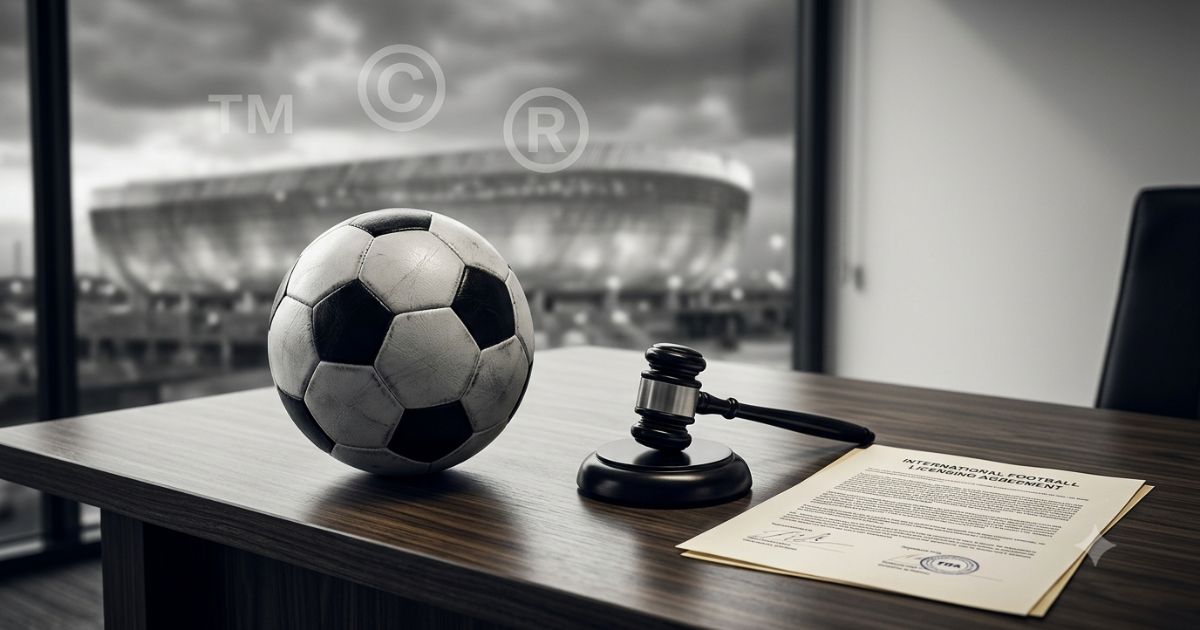
Every four years, the FIFA World Cup transforms into one of the most closely guarded intellectual property portfolios in global sport. Behind the spectacle of goals and penalty shootouts sits a sophisticated legal architecture of trademarks, copyright, licensing agreements, and anti-ambush marketing enforcement designed to protect billions of dollars in commercial value. For businesses, marketers, and legal counsel alike, understanding this framework is essential before any campaign references the tournament.
Trademarks
Trademarks form the backbone of FIFA’s IP portfolio. FIFA registers and enforces rights in the World Cup name, tournament logos, emblems, mascots, host-year combinations (such as “USA 2026”), and the trophy’s visual design in relevant jurisdictions worldwide. FIFA’s Intellectual Property Guidelines catalogue a broad portfolio of protected assets covering these marks, enforced through trademark law, copyright, and unfair competition principles in virtually every country.
Trademark protection allows FIFA to prevent unauthorized use of these marks on merchandise, in advertising, and in association with unrelated goods or services. It is also the legal basis for licensing arrangements, under which official sponsors and merchandise partners pay for the right to use World Cup branding commercially.
Copyright
Copyright protects the creative and audiovisual output surrounding the tournament: match broadcasts, highlight packages, official films, promotional materials, the tournament’s official emblem as an artistic work, music and anthems commissioned for the event, and website or app content. Broadcasters who acquire media rights are, in substance, acquiring a license to exploit FIFA’s copyright in the live transmission and associated footage, along with a bundle of contractual exclusivity rights layered on top.
Copyright also covers FIFA’s own promotional content, and it underpins takedown and enforcement action against unauthorized streaming, clip-sharing, or reproduction of broadcast footage online.
Broadcasting and Media Rights
Distinct from copyright itself, media rights are the commercial licenses through which FIFA grants broadcasters the right to transmit matches within a defined territory, language, and platform. FIFA does not sell one global broadcast package; because many countries require free-to-air access to World Cup coverage, rights are negotiated territory by territory, often split by language (as with English- and Spanish-language U.S. rights) and by platform (television, radio, mobile, streaming).
Broadcasting revenue is now FIFA’s largest income source. For the 2023–2026 commercial cycle, FIFA budgeted approximately $4.26 billion in broadcasting revenue, with rights tied specifically to the 2026 tournament expected to exceed $3.8 billion given its expansion to 104 matches. These agreements increasingly include digital and social-media distribution terms, such as arrangements permitting broadcasters to stream limited match footage on platforms like YouTube as a gateway to fuller coverage elsewhere.
Merchandising and Licensing Rights
Layered on top of trademark and copyright protection is a commercial licensing structure that authorizes manufacturers to produce official merchandise — replica kits, mascots, video games, trading cards, and collectibles — bearing World Cup marks. These licenses are contractual in nature but depend entirely on the underlying trademark and copyright rights being enforceable; without robust IP protection, the licensing revenue model collapses.
Image and Personality Rights
Player likenesses, names, and images are protected under separate personality or image-rights regimes, which vary significantly by jurisdiction. National team players typically license their image rights collectively through their federations or players’ associations for official FIFA products (such as video games or trading cards), while individual commercial endorsements remain governed by separate agreements with the players themselves. This is a distinct legal track from FIFA’s own trademark and copyright portfolio, though the two frequently intersect in official licensed products.
Domain Names and Digital Assets
FIFA also protects its brand in the digital sphere through domain name registrations and enforcement under mechanisms such as the Uniform Domain-Name Dispute-Resolution Policy (UDRP), used to recover domains that improperly incorporate World Cup or tournament-related marks. This sits alongside routine digital brand monitoring for counterfeit merchandise sites and unauthorized streaming portals.
For companies seeking to engage with World Cup fever without infringing FIFA’s rights, several principles apply. First, avoid any use of protected marks, mascots, or tournament-year combinations without a license. Second, review the specific legal regime of each relevant host country — general trademark principles, competition law, and any protected-event legislation can differ meaningfully by jurisdiction, and clearance in one market does not guarantee clearance in another. Third, be cautious with imagery, colour schemes, or slogans that could imply official affiliation, even where no protected mark is used directly, since unfair competition and passing-off claims can succeed on implied association alone. Finally, legal review before launch — particularly for cross-border, social media, or influencer-driven campaigns — has become standard practice given the speed and sophistication of FIFA’s enforcement mechanisms.
The World Cup’s commercial scale means its intellectual property disputes will only grow more complex as tournaments expand and digital platforms multiply the ways brands can (intentionally or not) associate themselves with the game. For businesses operating in this space, the safest strategy remains an independent, clearly original campaign — and early legal advice.
By entering the email address you agree to our Privacy Policy.