UAE Domestic Worker Recruitment: Agency vs. Direct Hiring
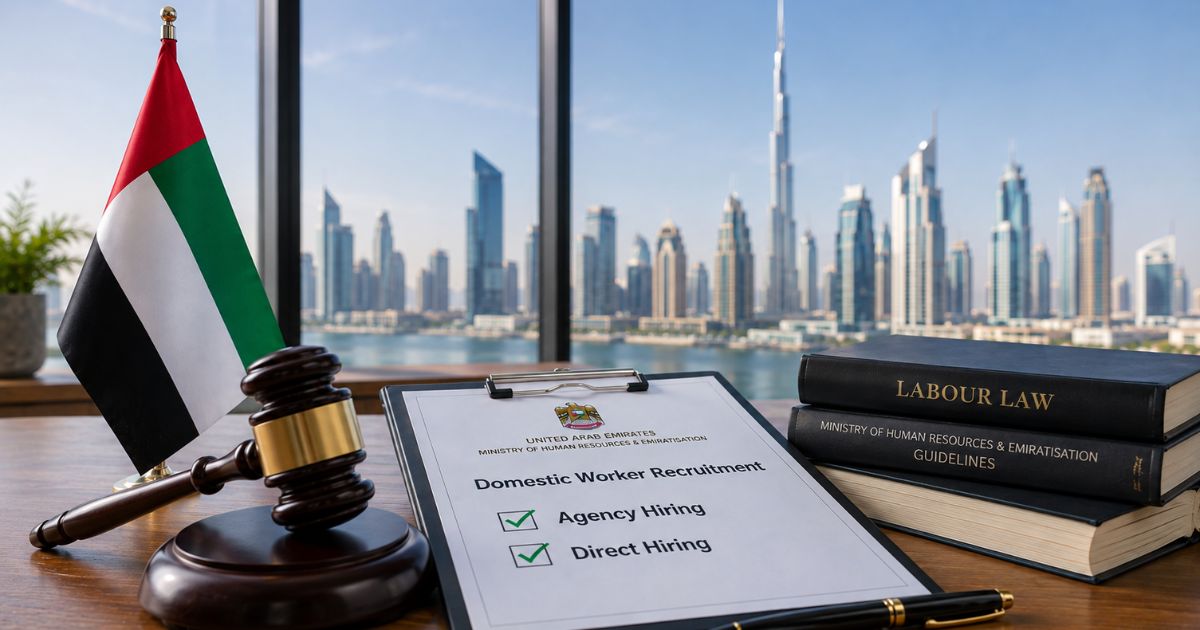
The Ministry of Human Resources and Emiratisation (MoHRE) has issued a regulatory update clarifying the legal mechanisms and employer safeguards governing the recruitment of domestic workers across the United Arab Emirates.
The directive outlines two distinct recruitment avenues available to UAE households hiring through a MoHRE-licensed domestic worker recruitment agency or conducting direct recruitment without an intermediary and highlights the significant legal and financial consequences tied to each route.
Pathway 1: Recruitment via Licensed Agencies
Engaging a licensed recruitment agency provides employers with formal contractual protections under federal legislation governing domestic labor. The ministry verified that 138 licensed domestic worker recruitment agencies currently operate nationwide under strict regulatory supervision, including regular audits, performance evaluations, and mandatory service standards.
Key statutory safeguards available when hiring through licensed agencies include:
- Two-Year Guarantee Period: Licensed agencies must provide a statutory two-year guarantee covering scenarios where a domestic worker absconds, refuses to perform duties, or fails required medical and professional evaluations.
- Pro-Rata Fee Refunds: If a worker terminates the employment contract without a legitimate legal reason following the probation period, the employer is entitled to recover a pro-rata portion of the recruitment costs from the agency within strictly mandated timelines.
- Full Pre-Employment Vetting: Licensed agencies carry legal obligations to ensure workers are physically, psychologically, and professionally fit, alongside providing pre-employment training, legal documentation, and post-recruitment support.
Pathway 2: Direct Recruitment
Direct recruitment allows an employer to hire a specific named worker without using a licensed agency. However, MoHRE emphasized that selecting this option shifts complete operational and legal responsibility directly to the household.
Crucially, employers who opt for direct recruitment forfeit access to the statutory guarantees, refund rights, and agency protections built into the domestic labor framework. MoHRE stressed that households choosing direct hiring cannot rely on private agreements to claim statutory remedies or agency-backed protections under the law if a worker absconds, resigns prematurely, or fails to fulfill contractual duties.
Legal Perspective for UAE Households
From a legal and risk-management standpoint, selecting the appropriate recruitment pathway requires balancing convenience against financial liability:
- Risk Allocation: Hiring through an authorized agency functions as an insurance mechanism against sudden worker departure or non-performance. Conversely, direct hiring leaves the employer exposed to losing processing and visa expenses with no legal recourse to claim agency-backed refunds.
- Contractual Verification: Employers engaging licensed agencies should ensure the contract used strictly aligns with MoHRE’s standardized template and maintain all payment receipts to enforce refund terms if a dispute arises.
- Licensing Due Diligence: Before signing contracts or making recruitment payments, households should verify that the service provider holds an active license on MoHRE’s official portal, as engaging unapproved intermediaries carries legal penalties.
MoHRE concluded its guidance by reiterating that licensed recruitment agencies remain the safest, most structured option for households seeking predictable dispute resolution and legal certainty.
By entering the email address you agree to our Privacy Policy.